
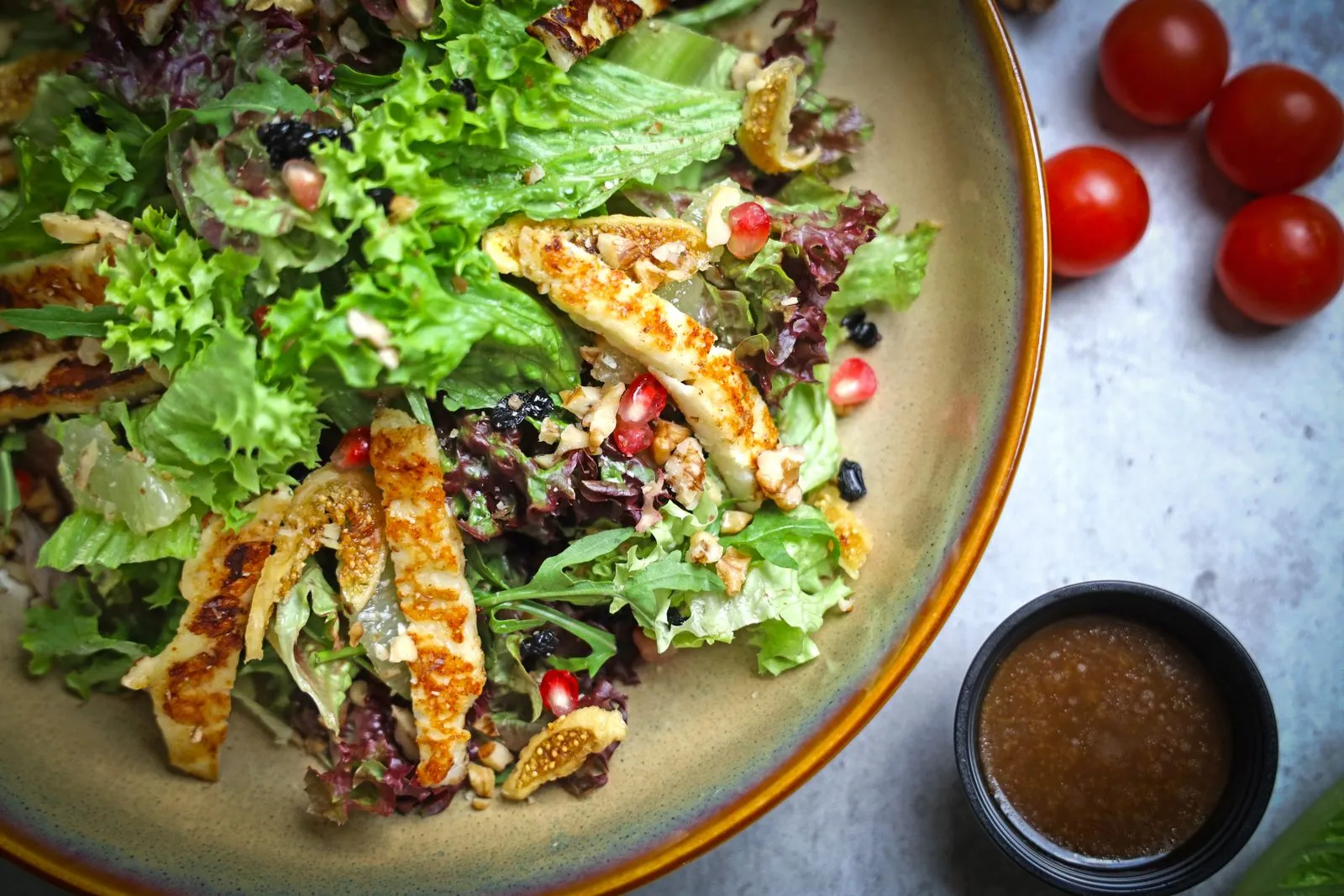
Cider vinegar brings a bright, fruity tang to salad dressings, but a good vinaigrette should taste balanced rather than sharply sour. Start with a reliable oil-to-vinegar ratio, then adjust it to suit your greens and other ingredients. A little mustard helps the dressing come together, while honey, herbs, or garlic can add depth. These simple guidelines make it easy to mix a dressing that complements your salad instead of overpowering it.
Start With a Simple Ratio
For a classic vinaigrette, combine three parts oil with one part cider vinegar. For example, whisk together three tablespoons of olive oil and one tablespoon of vinegar. This is a useful starting point, not a strict rule: use a little less vinegar for a mild dressing or add more if you like a brighter, tangier taste.
Add a small spoonful of Dijon mustard, plus salt and black pepper, to help bind the oil and vinegar and season the dressing. Whisk the ingredients in a bowl or shake them in a tightly closed jar. Taste with a leaf of the salad you plan to serve, since greens and toppings can change how strong the dressing seems.
Balance the Tang
If the dressing tastes too sharp, add oil a teaspoon at a time or stir in a small amount of honey or maple syrup. Sweetness should soften the vinegar, not make the dressing taste sugary. If it feels flat, add a pinch of salt or a little more vinegar, then taste again before changing anything else.
For a fuller flavor, try minced shallot, crushed garlic, or a small spoonful of yogurt. Let a dressing with raw onion or garlic sit for a few minutes before serving so the flavors can mingle. Keep adjustments small and taste as you go; it is easier to add more than to correct an over-seasoned batch.
Match Dressing to the Salad
Cider vinegar pairs naturally with crisp greens, apples, pears, walnuts, and sharp cheeses. Try it in a salad of mixed greens with sliced apple and toasted nuts, using olive oil, Dijon, and just a touch of honey. Its fruity acidity can also brighten cabbage slaw, roasted squash, or a grain salad with lentils.
For delicate greens, keep the dressing light and use a mild oil so the vinegar does not dominate. Heartier ingredients, such as kale, beans, or roasted vegetables, can stand up to a more assertive mixture. Fresh thyme, parsley, or chives work well; start with a small amount of chopped herbs and adjust after tasting.
Mix, Store, and Serve
Whisk or shake the dressing just before serving because oil and vinegar naturally separate. Toss the salad with a little dressing at a time, then add more only if needed. This helps coat the leaves without leaving them soggy, and it keeps crunchy toppings like croutons or toasted nuts crisp.
Store leftover dressing in a clean, covered container in the refrigerator and use a recipe without fresh ingredients as a guide for how long to keep it. Chilling can make olive oil cloudy or firm; let the dressing sit at room temperature briefly, then shake it well. Discard it if its smell, appearance, or texture seems unusual.
A three-to-one oil-to-cider-vinegar ratio gives you a dependable base, while mustard, a touch of sweetness, and fresh herbs help tailor it to the salad. Taste and adjust in small steps, then toss lightly before serving. Experiment with the ingredients you have on hand to find combinations you enjoy.